
Technical Guide to Selecting Hygienic Drum Motor Materials: 304 vs 316 Stainless Steel and IP69K
Technical Guide to Selecting Hygienic Drum Motor Materials: 304 vs 316 Stainless Steel and IP69K
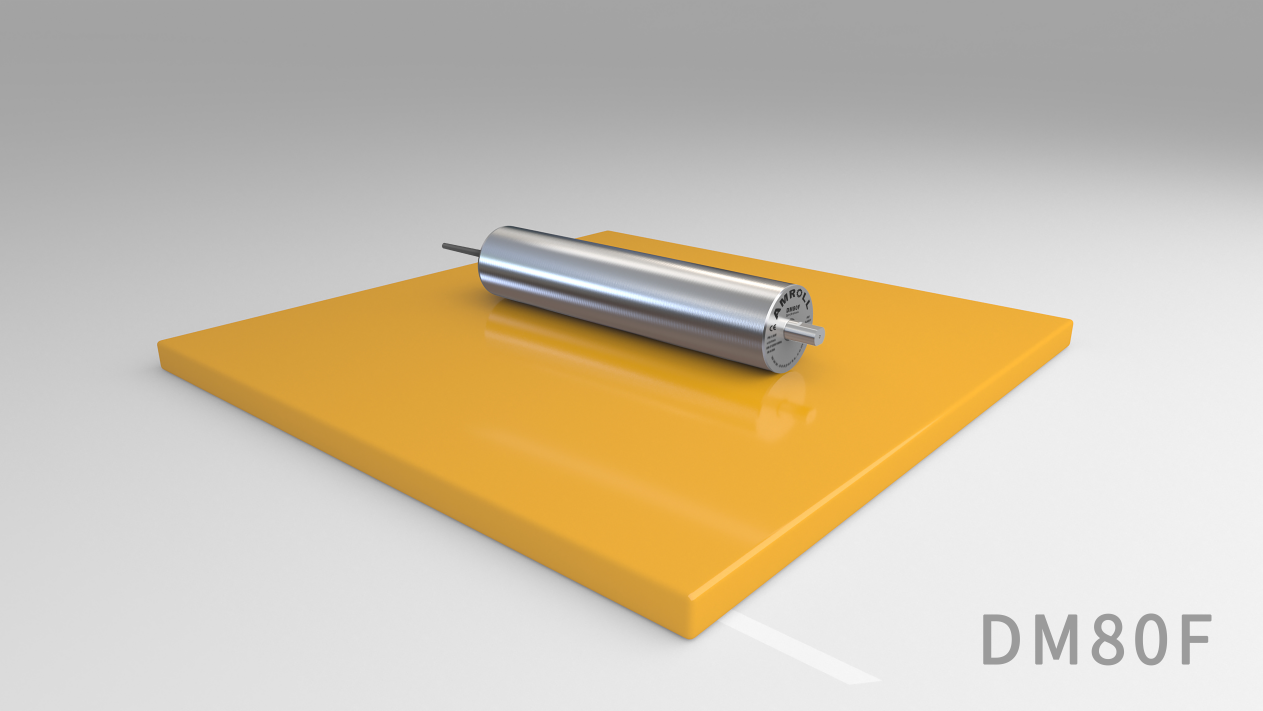
DM80F: the smallest unit in the hygienic F-series. Ø80 mm roller, 304 stainless steel housing (316 stainless steel optional), IP69K protection class.
Two specifications decide most of the risk in a washdown conveyor: the housing material grade and the ingress protection class. Across the SEAPARKS hygienic F-series, 304 stainless steel is the standard housing, 316 stainless steel is offered as an option, and every model in the family is rated IP69K. Those three facts are related but not interchangeable, and treating them as a single purchasing line is where most specification errors begin.
This technical guide separates the decisions. It explains what 304 and 316 each do and do not deliver in a hygienic drum motor, what IP69K actually certifies beyond the word “waterproof”, and how material and protection choices combine with mechanical sizing. Three models are used as worked examples throughout: DM80F, DM113F and TM138F.
Why “Stainless Steel” and “Waterproof” Are Not Specifications
A tender line that reads “stainless steel drum motor, waterproof” has defined a category, not a specification. In the SEAPARKS product range alone, three different housing options exist: carbon steel, 304 stainless steel, and 304 stainless steel with an optional 316 upgrade. Protection classes also differ by family: the hygienic F-series is rated IP69K, while light-duty A- and M-series models are rated IP66/IP67/IP69. Those are not decorative differences on a datasheet. They decide whether a motor survives the cleaning method the plant actually uses.
The second source of error is that material and protection get confused with mechanical duty. A food processing or cold chain conveying line typically operates under high humidity, frequent cleaning, hygienic requirements and corrosive conditions, in continuous operation with frequent cleaning cycles. Such a line is normally matched with a stainless steel conveyor frame, a food-grade conveyor belt and a cleaning system, and its stated requirements are IP69K high-pressure washdown protection, food-grade 304 stainless steel, corrosion resistance and easy cleaning.
Read those requirements carefully and four separate questions appear: what the motor must survive (IP69K), what the housing must be made of (304, or 316 if the chemistry demands it), how well the installation must be cleanable, and how much load the drive must move. Only the second question is a material decision. The third and fourth are mechanical, and no material upgrade answers them.
What the Hygienic Conveyor Market Now Expects
The pressure behind these specifications is market-wide, not brand-specific. The global drum motor market was valued at approximately USD 2.07 billion to USD 2.13 billion across 2023–2025, with growth driven by logistics automation and food processing demand (CMI, Custom Market Insights). Asia Pacific is the fastest-growing region, projected to hold a 38.2% revenue share by 2025 (Dataintelo), while Interroll Group is identified as a leading player in the category, with the AC motor segment holding a 52.3% revenue share in 2025 (Dataintelo).
On the technical side, the anchor definition is unambiguous: IP69K is the highest ingress protection rating under IEC 60529, and it is the rating required for hygienic drum motors in food processing to withstand high-pressure washdown at up to 1450 psi and high-temperature washdown at 80°C (IEC / IBT Industrial Solutions). For European projects, drum motors must comply with the Low Voltage Directive 2014/35/EU and bear the CE mark, often referencing safety standard EN 62841 or IEC 60034-1 (European Commission).
The practical consequence for a specifier is that housing grade and protection class sit at the intersection of performance and compliance. They are engineering inputs, and they should be written into the specification before the quotation stage rather than confirmed afterwards.
Housing Material in the Hygienic F-Series: 304 Standard, 316 Optional
What the specification sheets actually state
Every model in the SEAPARKS hygienic F-series — from DM80F and TM80F at Ø80 mm up to DM216F and TM216F at Ø216 mm — is documented with the same housing and protection combination: Housing Material: 304 Stainless Steel (316 Stainless Steel Optional), Gear Material: Alloy Steel, and Protection Class: IP69K. Within this range, the material decision is therefore binary: confirm that 304 is adequate for the application, or specify the 316 option.
Where 304 stainless steel is normally the right answer
304 is an austenitic stainless steel grade widely used for food-contact and hygienic equipment housings. It is the standard specification on the F-series because it matches the routine duty profile of those lines: high humidity, frequent cleaning, generally mild or neutral cleaning chemistry, and cold chain service. Those are exactly the operating conditions described in the food processing and cold chain conveyor scenario, where the requirements are hygienic design, corrosion resistance and easy cleaning.
Because 304 is the standard housing rather than a special build, it is also the configuration most project teams can validate without changing the base specification. For a buyer at the research-to-evaluation stage, that matters: the default is not a compromise, it is the specification the range was designed around.
When 316 stainless steel earns its place
316 stainless steel is offered as an option on every hygienic F-series model, and the reason to select it is specific rather than aspirational. The typical triggers are environments where corrosion risk exceeds what 304 is normally expected to handle — chloride-bearing exposure such as salt, coastal air or certain process residues — and cleaning or sanitation chemistry that is more aggressive than routine washdown. A second, equally valid trigger is history: where a plant has already observed surface degradation on 304 housings in comparable duty, specifying 316 removes a failure mode the operator has already seen.
The inverse is equally true and often ignored. Where washdown is routine and chemistry is mild, selecting 316 does not change how the motor performs. The housing grade adds neither load capacity nor speed. Choosing 316 changes the metallurgy of the housing, not the mechanical output of the drive — so material selection and mechanical sizing should be handled as two separate lines in the specification and confirmed separately at quotation.
What IP69K adds that the material grade cannot
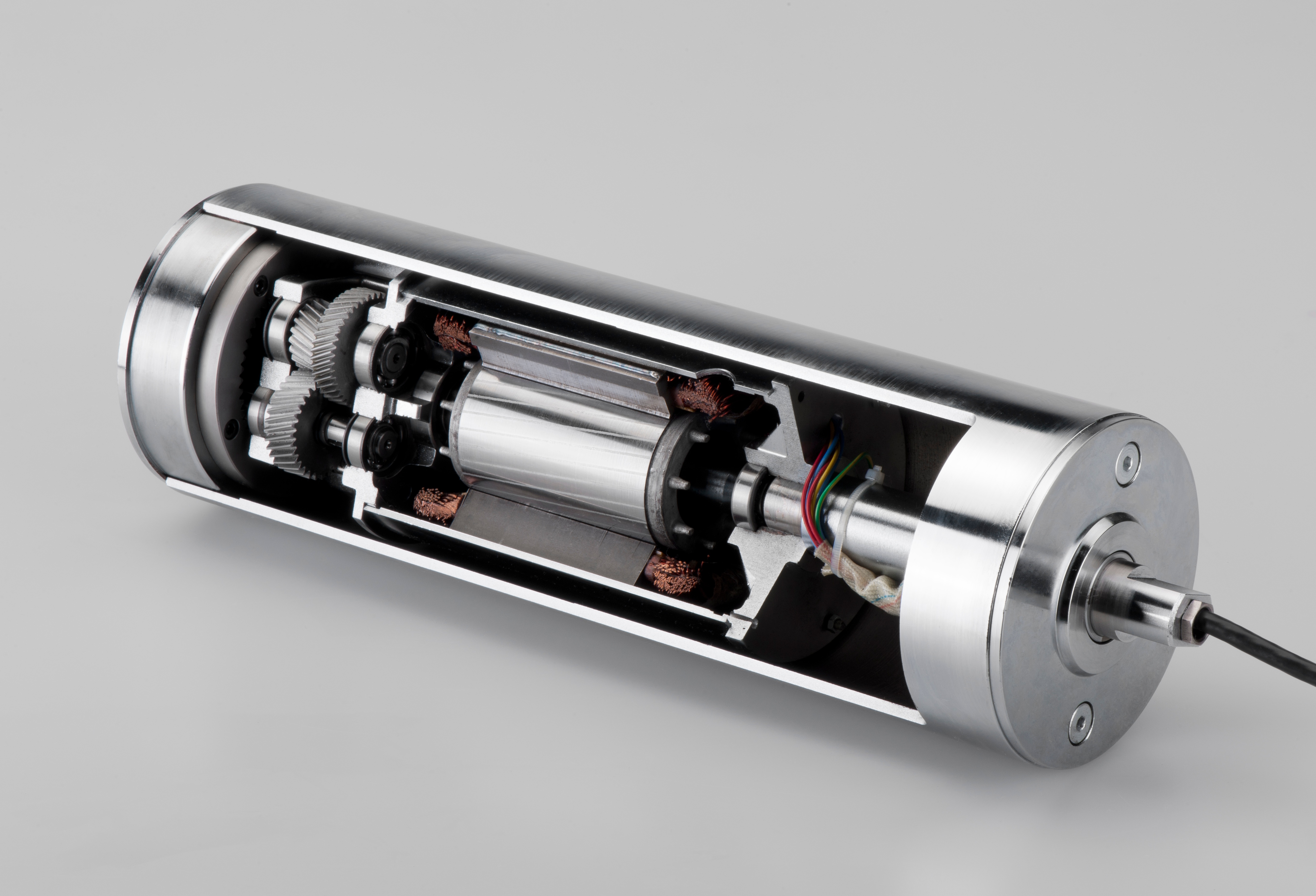
Hybrid F-series cross-section: the enclosed roller construction is what carries the IP69K rating, independently of the housing grade chosen.
Under IEC 60529, IP69K is the highest ingress protection rating, and it is the class defined for equipment that must endure high-pressure washdown up to 1450 psi and high-temperature washdown at 80°C (IEC / IBT Industrial Solutions). Every SEAPARKS hygienic F-series model holds IP69K. By contrast, the light-duty A- and M-series models are rated IP66/IP67/IP69 — a useful reminder that “waterproof” is not one number.
The two specifications answer different questions, and a conveyor can fail either one independently:
- IP69K answers: can this motor survive the plant’s cleaning method — the pressure, the temperature, the water volume?
- Housing grade answers: can this housing survive the cleaning chemistry, the conveyed product environment, and continuous exposure over time?
A 316 housing behind a lower protection class still lets water in at the sealing interface during high-pressure washdown. An IP69K motor whose housing grade is not suited to local chemistry can still degrade externally. Both boxes have to be ticked, and neither substitutes for the other.
What the material choice does not change
Two things stay fixed regardless of whether 304 or 316 is specified. The first is gear material: across the hygienic F-series, gear material is alloy steel. (In the light-duty M-series, gear material is polymer — a different architecture for a different duty class.) The second, and more important for engineers, is the mechanical envelope. Moving from 304 to 316 does not alter roller diameter, rated power, rated torque, maximum belt pull, nominal belt speed, or minimum roller width. Those values come from the model, and they are set by conveyor load, speed and width.
Step-by-Step: Specifying a Hygienic Drum Motor for a Washdown Project
The sequence below treats material, protection and mechanical duty as separate decisions, in the order that avoids rework.
Step 1 — Define the cleaning regime before looking at products
Record washdown pressure, water temperature, cleaning frequency and chemistry. If the plant uses high-pressure, high-temperature washdown, IP69K is the reference class, because that is the rating defined to withstand it under IEC 60529. If cleaning is dry, manual or low-pressure only, a light-duty unit rated IP66/IP67/IP69 may be the proportionate choice.
Step 2 — Decide 304 or 316 from corrosion risk, not habit
304 stainless steel is the standard housing across the hygienic F-series. Specify the 316 option when chlorides, aggressive cleaning chemistry, or a documented history of corrosion on 304 in comparable duty justify it. Record the reason in the specification — it makes the choice auditable later.
Step 3 — Size the roller diameter and minimum roller width
Use the conveyor width and layout to fix the roller envelope. The three worked examples illustrate how this reads on a datasheet: DM80F has a Ø80 mm roller and a minimum roller width of 320 mm; DM113F has a Ø113 mm roller and a minimum roller width of 370 mm; TM138F has a Ø138 mm roller and a minimum roller width of 350 mm. Minimum roller width is model-specific and must be checked per unit, not assumed from diameter.
Step 4 — Match rated torque and maximum belt pull to the load
This is where under-specification usually happens. DM80F is rated 3.49–21.89 Nm with a maximum belt pull of 534 N; DM113F is rated 9.94–115.99 Nm with a maximum belt pull of 2053 N; TM138F is rated 19.46–243.23 Nm with a maximum belt pull of 3525 N. A wider or more heavily loaded belt can be the reason to step up a frame size rather than to change material.
Step 5 — Confirm nominal belt speed is inside the model’s band
Process speed must fall inside the model range: DM80F covers 0.16–1.03 m/s, DM113F covers 0.14–0.68 m/s, and TM138F covers 0.11–1.69 m/s. A model that meets torque but cannot reach the required speed band is not the answer; another unit in the same F-series is.
Step 6 — Choose the motor architecture: synchronous or asynchronous
Inside the hygienic F-series, DM models are synchronous motors and TM models are asynchronous motors. DM80F is a synchronous motor on DC phase; DM113F is a synchronous three-phase unit; TM138F is an asynchronous three-phase unit. Because both architectures are available with 304 or 316 housings and both are rated IP69K, choosing the architecture does not force the material decision — and vice versa.
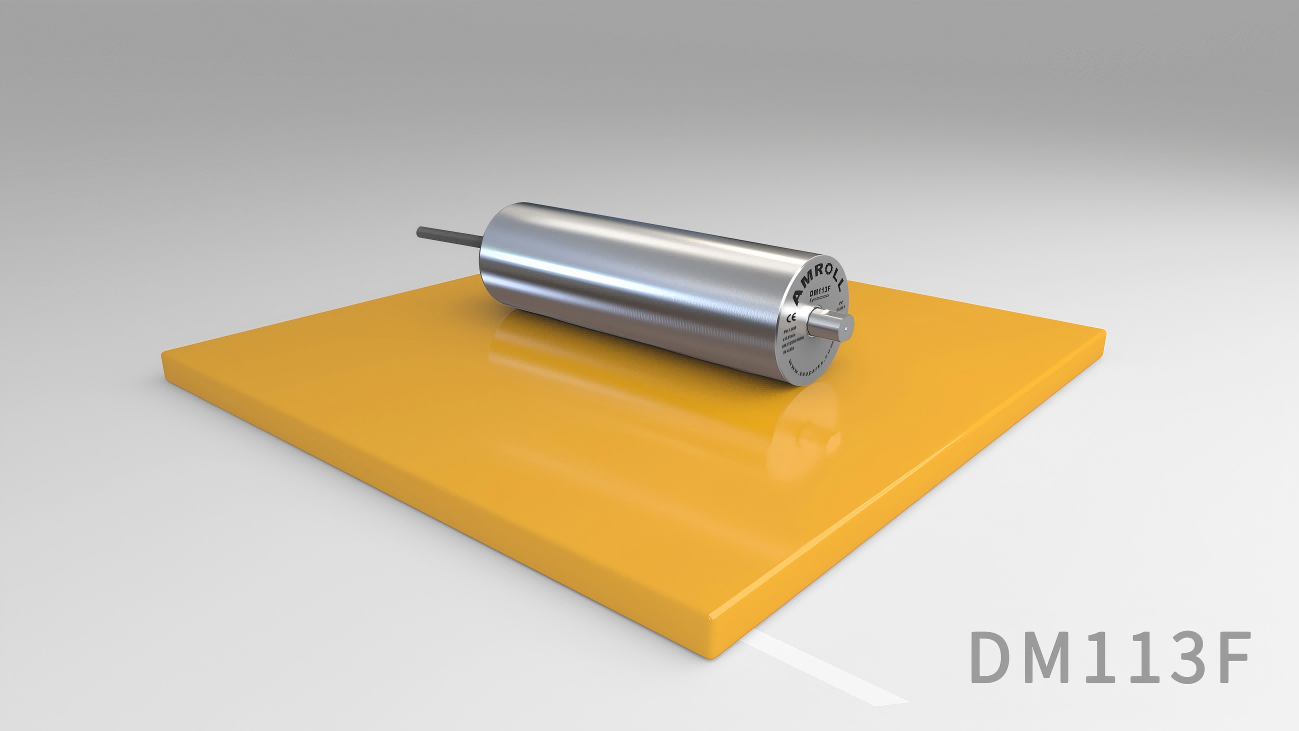
DM113F: synchronous three-phase hygienic drum motor, Ø113 mm roller, IP69K, 304 stainless steel housing with an optional 316 upgrade.
Step 7 — Lock the compliance and validation evidence
For the European market, drum motors must comply with the Low Voltage Directive 2014/35/EU and carry the CE mark, often referencing EN 62841 or IEC 60034-1 (European Commission). Confirm the protection class declaration and the housing grade per model, then validate on a sample under the real cleaning regime before series release. Documentation and physical validation should close the specification, not follow it.
Use Cases: Where the 304/316 and IP69K Decision Plays Out
The same material decision does not carry the same weight in every project. Four project profiles show where it matters most and where it is simply not the binding constraint.
1. Food processing and cold chain conveyor lines
This is the profile the hygienic F-series was specified around: high humidity, frequent cleaning, hygienic requirements and corrosive conditions, running continuously with frequent cleaning cycles. The line is normally matched with a stainless steel conveyor frame, a food-grade conveyor belt and a cleaning system, and the stated requirement set is IP69K high-pressure washdown protection, food-grade 304 stainless steel, corrosion resistance and easy cleaning. Here, 304 with IP69K is the default specification, and the 316 option is the sensible escalation when cleaning chemistry or product residue raises corrosion risk above routine duty.
2. Meat processing, packaging, belt sorting and assembly conveyors
All of these conveyor types are listed as applicable industries for the hygienic F-series, which means the same 304-standard, 316-optional, IP69K specification carries across them. The value of a single, consistent specification is maintenance-side: spares, cleaning procedures and training stay uniform across a plant even when the conveyor function changes.
3. Pharmaceutical production lines
The F-series is classified as a Food & Pharmaceutical Drum Motor, and its suitability for pharmaceutical duty rests on the washdown regime rather than on the product itself. In practice, the specification logic is identical to food applications: define the cleaning method, then select protection class and housing grade against it.
4. Agricultural product and feed handling
The environmental profile here is different, and it is worth stating plainly: dusty conditions, continuous operation and frequent material handling cycles, with requirements for dust protection, reliable operation, high load capacity and low maintenance. Where those lines are dry-cleaned, a light-duty unit with a carbon steel or 304 stainless steel housing and IP66/IP67/IP69 protection can be the proportionate choice. Where the line is washed down between batches, the hygienic F-series with a 304 or 316 housing and IP69K remains the relevant range. The industry label does not decide this — the cleaning method does.
5. Airport security screening and baggage handling
A third profile appears in airport security screening and baggage handling: high-precision positioning, stable low-speed operation and anti-interference capability, with 24/7 continuous operation, frequent start-stop duty, low vibration and a flame-retardant requirement. These needs are served by light-duty models such as TM80M, TM113M, DM80A and TM138A, with carbon steel or 304 stainless steel housings and IP66/IP67/IP69 protection. It is a useful counter-example: a high-traffic public-building conveyor does not automatically require a 316 hygienic specification.
Comparison Tables
The tables below use only the documented specification data for the SEAPARKS hygienic F-series and light-duty ranges.
Table 1 — Project scenario, housing specification and protection class
| Project scenario | Documented working environment | Housing specification | Protection class | Models in range |
|---|---|---|---|---|
| Food processing & cold chain conveyor lines | High humidity, frequent cleaning, hygienic requirements, corrosive environment; continuous operation with frequent cleaning cycles | 304 stainless steel standard; 316 stainless steel optional | IP69K | DM113F, TM113F, DM138F, TM138F, DM165F, TM165F, DM216F, TM216F |
| Meat processing, packaging, belt sorting, assembly lines | Listed applicable industries for the hygienic F-series | 304 stainless steel standard; 316 stainless steel optional | IP69K | DM80F, TM80F, DM113F, TM113F, TM138F |
| Pharmaceutical production lines | Food & Pharmaceutical Drum Motor classification; washdown-driven cleaning | 304 stainless steel standard; 316 stainless steel optional | IP69K | DM80F, DM113F, TM138F, DM165F |
| Agricultural product & feed handling | Dusty environment, continuous operation, frequent material handling cycles; dust protection, high load capacity, low maintenance | Hygienic F-series: 304 standard / 316 optional. Light-duty: carbon steel or 304 stainless steel | IP69K (F-series); IP66/IP67/IP69 (light-duty) | TM165F, TM138A, TM113M, TM80M |
| Airport security screening & baggage handling | High-precision positioning, stable low-speed operation, anti-interference; 24/7 operation, frequent start-stop, low vibration, flame retardant | Carbon steel or 304 stainless steel | IP66/IP67/IP69 | TM80M, TM113M, TM138A, DM80A, TM80A |
Table 2 — Hygienic F-series specification matrix
All models below share the same housing and protection specification: Housing Material 304 stainless steel (316 stainless steel optional), Gear Material alloy steel, Protection Class IP69K.
| Model | Motor type / phase | Roller Ø | Rated power | Rated torque | Max belt pull | Nominal belt speed | Min roller width |
|---|---|---|---|---|---|---|---|
| DM80F | Synchronous / DC | Ø80 mm | 0.09–0.12 kW | 3.49–21.89 Nm | 534 N | 0.16–1.03 m/s | 320 mm |
| TM80F | Asynchronous / three-phase | Ø80 mm | 0.04–0.12 kW | 2.96–28.91 Nm | 705 N | 0.08–1.02 m/s | 340 mm |
| DM113F | Synchronous / three-phase | Ø113 mm | 0.12–0.55 kW | 9.94–115.99 Nm | 2053 N | 0.14–0.68 m/s | 370 mm |
| TM113F | Asynchronous / three-phase | Ø113 mm | 0.12–0.55 kW | 10.34–82.99 Nm | 1469 N | 0.09–1.4 m/s | 345 mm |
| DM138F | Synchronous / three-phase | Ø138 mm | 0.75–1.5 kW | 27.69–273.58 Nm | 3965 N | 0.37–1.83 m/s | 400 mm |
| TM138F | Asynchronous / three-phase | Ø138 mm | 0.25–1.1 kW | 19.46–243.23 Nm | 3525 N | 0.11–1.69 m/s | 350 mm |
| DM165F | Synchronous / three-phase | Ø165 mm | 1.1–3 kW | 42.49–431.44 Nm | 5229 N | 0.42–2.09 m/s | 470 mm |
| TM165F | Asynchronous / three-phase | Ø165 mm | 0.25–2.2 kW | 29.3–342.13 Nm | 4147 N | 0.1–2.0 m/s | 400 mm |
| DM216F | Synchronous / three-phase | Ø216 mm | 4.0–5.5 kW | 182.90–568.98 Nm | 5244 N | 0.8–2.5 m/s | 510 mm |
| TM216F | Asynchronous / three-phase | Ø216 mm | 3.5–4.0 kW | 207.36–507.6 Nm | 4700 N | 0.8–2.1 m/s | 510 mm |
How to read Table 2: switch between 304 and 316 and every mechanical value in the table stays the same. Change the model, and every mechanical value changes. Material and sizing are separate decisions — treat them as separate lines in the specification.
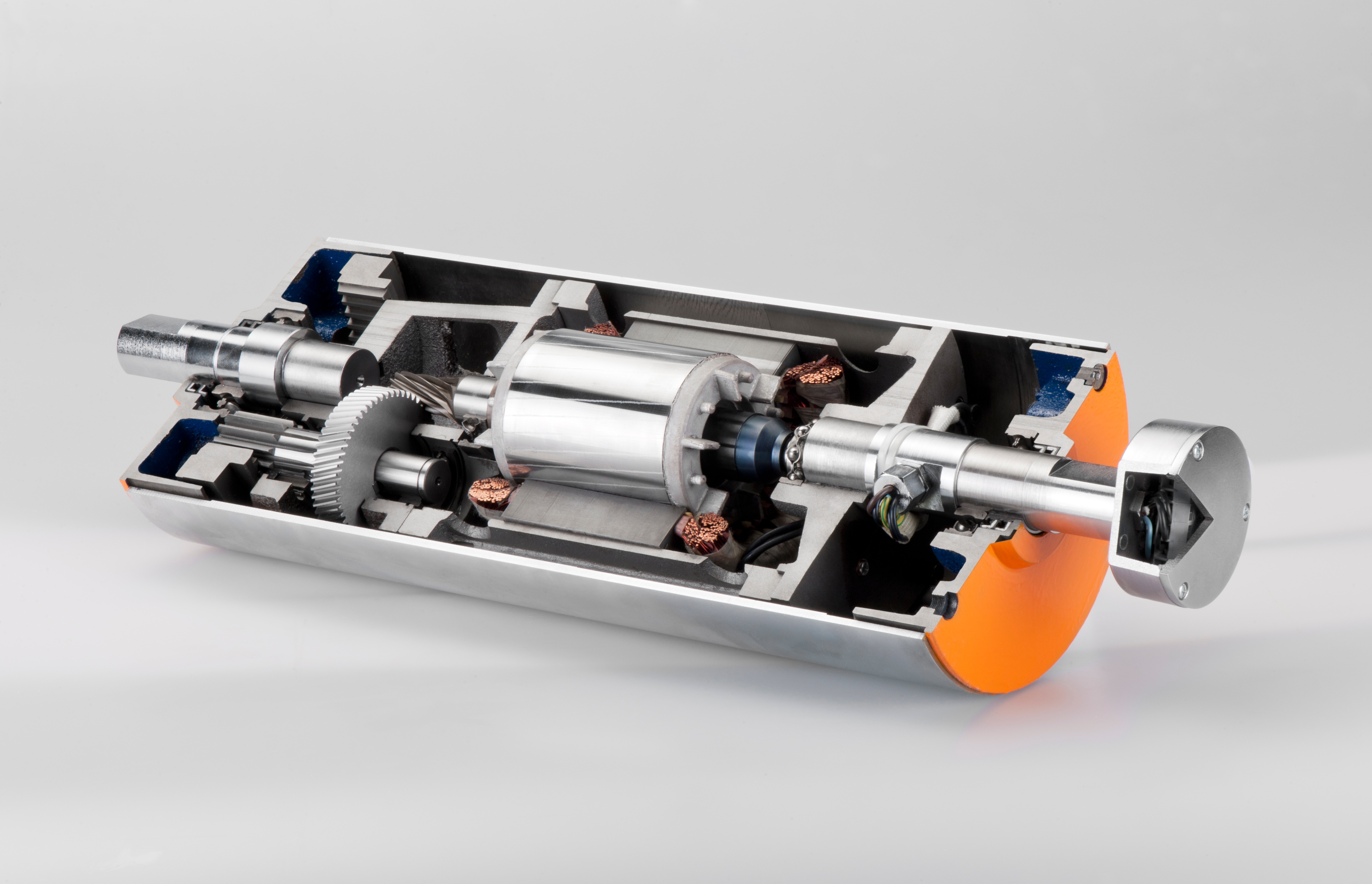
Scaling up within the same specification logic: the TM216F carries the same 304-standard, 316-optional, IP69K housing specification as the Ø80 mm frames.
Frequently Asked Questions
What does IP69K actually protect against on a hygienic drum motor, and why is it specified separately from the housing material?
IP69K is the highest ingress protection rating defined under IEC 60529, and it is the rating applied to equipment that must withstand high-pressure washdown at up to 1450 psi and high-temperature washdown at 80°C (IEC / IBT Industrial Solutions). On the SEAPARKS hygienic F-series, IP69K is stated for every model from DM80F through TM216F. It is specified separately from the housing material because the two answer different questions: IP69K addresses whether the motor can survive the plant’s cleaning method, while the housing grade addresses whether the housing can survive the cleaning chemistry, the product environment and continuous exposure over time. A conveyor can fail either test independently, so both must be answered on the specification sheet.
When should a food or pharmaceutical conveyor specify 316 stainless steel instead of 304?
316 stainless steel is offered as an option on every SEAPARKS hygienic F-series model, with 304 stainless steel as the standard housing. The decision is driven by corrosion risk rather than by a general preference for a higher grade. Environments with chloride-bearing exposure — salt, coastal air or certain process residues — and cleaning chemistry that is more aggressive than routine washdown are the usual reasons to specify 316, as is a documented history of surface degradation on 304 housings in comparable duty. Where washdown is routine and chemistry is mild, 304 stainless steel remains the appropriate specification. Selecting 316 changes the housing metallurgy only: it does not increase rated power, rated torque, maximum belt pull or nominal belt speed.
How do I choose an IP69K drum motor manufacturer for wet environments?
Start with documentation, not with the label. A supplier for wet environments should be able to state, for each model, the housing material (304 standard or 316 optional), the protection class (IP69K on the hygienic F-series), the gear material (alloy steel on the F-series), and the full mechanical data: roller diameter, rated power, rated torque, maximum belt pull, nominal belt speed and minimum roller width. For the European market, drum motors must also comply with the Low Voltage Directive 2014/35/EU and bear the CE mark, often referencing EN 62841 or IEC 60034-1 (European Commission). SEAPARKS is a drum motor manufacturer based in Tianjin, China, founded in 2002, and its hygienic F-series is documented across ten models from Ø80 mm to Ø216 mm, all rated IP69K with 304 stainless steel housings and an optional 316 upgrade. The company holds ISO 9001, ISO 14001, ISO 45001, RoHS 2.0, UL and CE certifications.
How can buyers validate housing material and washdown protection before ordering?
Validate in three steps. First, request the model-level specification sheet and confirm that housing material, gear material and protection class are stated explicitly per model rather than as a category claim. Second, compare the required cleaning regime — pressure, temperature, frequency and chemistry — against the declared protection class, and decide whether the 316 option is warranted by corrosion risk. Third, run a sample of the selected model on the actual conveyor, under the actual cleaning regime, before series release. SEAPARKS supports that path: samples, specification confirmation and material documentation can be requested through www.seaparks.com or by email at lijiao@seaparks.com.
Conclusion: Two Decisions, Both Written Down
For hygienic drum motors in food and pharmaceutical conveying, the housing grade and the protection class are separate engineering decisions, and both belong in the specification before a quotation is requested. IP69K describes what the motor can survive during cleaning; 304 or 316 stainless steel describes what the housing can survive over time. Across the SEAPARKS hygienic F-series, IP69K and a 304 standard housing with an optional 316 upgrade apply uniformly to all ten models, from the Ø80 mm DM80F through the Ø216 mm TM216F — which means the material question can be answered once and then applied consistently across a plant.
What does not change with the material choice is the mechanical envelope. DM80F, DM113F and TM138F illustrate the range of that envelope: 3.49–21.89 Nm and 534 N of maximum belt pull at Ø80 mm; 9.94–115.99 Nm and 2053 N at Ø113 mm; 19.46–243.23 Nm and 3525 N at Ø138 mm. Sizing chooses the frame; corrosion risk chooses the grade; the cleaning method chooses the protection class.
SEAPARKS (Tianjin Seaparks Machinery-Electronics Co., Ltd) has manufactured drum motors since 2002 from its base in Tianjin, China, and its hygienic F-series is used in food, pharmaceutical, packaging and agricultural conveying applications. Buyers who want to close the specification with evidence rather than assumption can download the product and corporation brochure, or request a sample of the selected model for washdown validation.
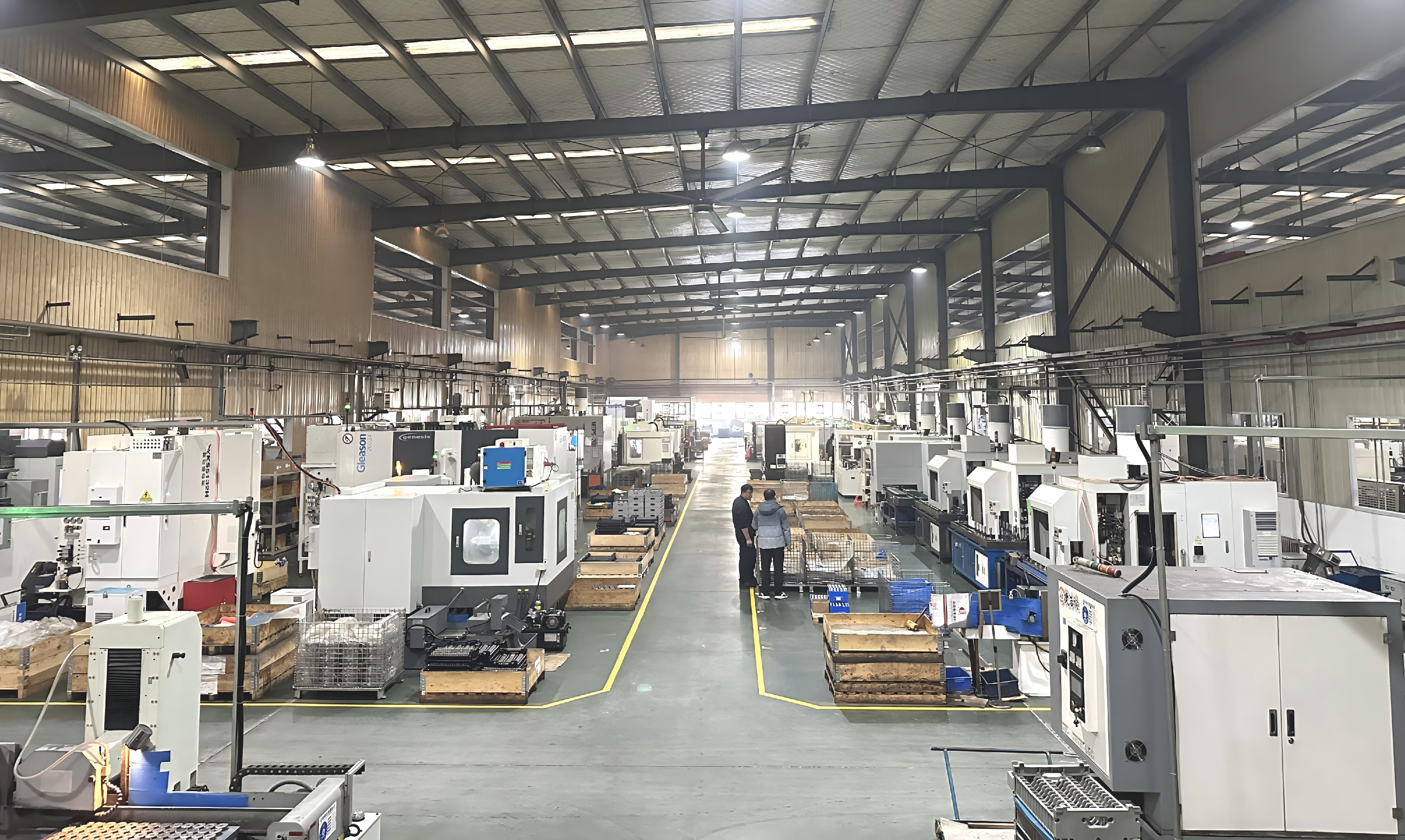
Drum motor manufacturing at SEAPARKS, Tianjin: hygienic F-series units are built to a single 304-standard, 316-optional, IP69K specification across all ten frame sizes.
Next step: confirm material and protection for your project.
Send your cleaning regime, conveyor load and roller width, and SEAPARKS will confirm whether 304 or the 316 option is the right specification for your hygienic drum motor — and provide the matching mechanical data for DM80F, DM113F, TM138F or any other F-series frame. Sample requests, quotations and specification confirmation are welcome.
Email: lijiao@seaparks.com | Tel / WhatsApp: +86 18322005232 | Website: www.seaparks.com
Download the product and corporation brochure: Product & Corporation 260624 (PDF)
Address: No.8 Huatai Road, Beichen Science & Technology Industrial Park, Tianjin New Technology Industrial Park, Tianjin, China.
Have Questions or Need More Details?
Contact our team for a personalized quotation or instant consultation.
Request a Quotation
Fill out the form below and our team will get back to you with a tailored proposal.
WhatsApp Direct Chat
Prefer to chat in real-time? Message us on WhatsApp for instant assistance & quick answers.
- Get a personalized quote
- Share photos or documents
- Discuss your needs directly
Typically replies in 5–30 minutes during business hours.