
Drum Motor Application Guide: Baggage, Packaging & Security Screening Conveyors
Drum Motor Application Guide: Baggage, Packaging & Security Screening Conveyors
Answer first: a drum motor is matched to a conveyor application through six variables — drum diameter class, minimum roller width, belt speed, belt pull, housing material and ingress protection class. The application fixes most of these values before the engineer ever opens a catalogue. The engineer's job is therefore to match a model family to the conveyor, not to pick a model first and adjust the conveyor afterwards. This guide shows how that matching works for airport baggage check-in conveyors, security screening machines, packaging lines, belt scale conveyors and general belt conveyors, using the SEAPARKS light duty model references TM80M, TM113M, TM80A, TM113A and DM80A.
A drum motor — also called a motorized pulley, motorized drum or conveyor drum motor — integrates the electric motor, the gear reducer and the drive bearings inside a single rotating shell that also drives the belt. Because there is no external motor, gearbox, chain or coupling, the drum shell itself becomes a structural and environmental component: it carries the belt load, forms the sealing boundary, and determines what the conveyor can be cleaned with. That is why application matching always starts with the environment and the belt duty, and only then moves to the model reference.
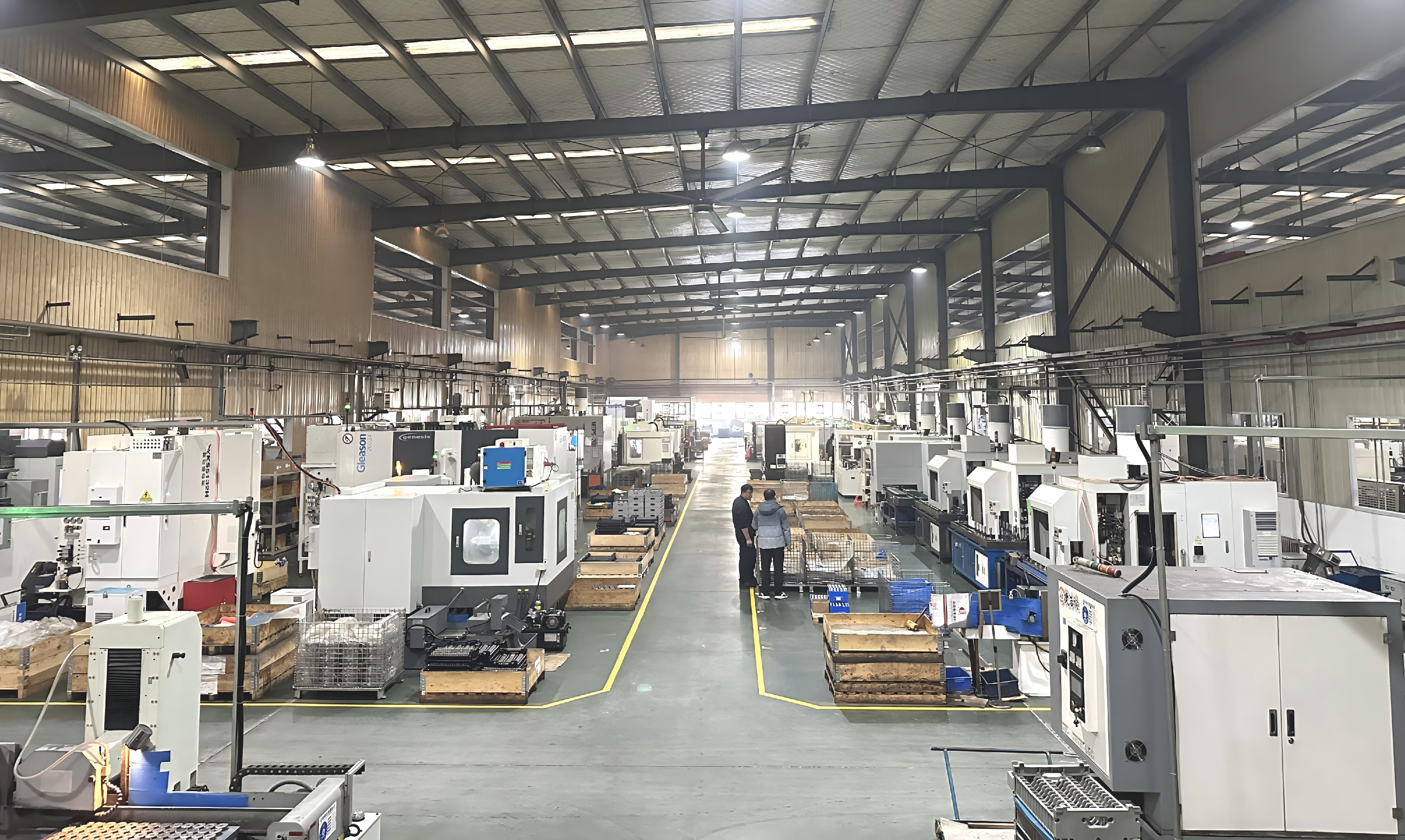
Motorized conveyor drum motor production at one of the SEAPARKS factory workshops in Tianjin, China.
Problem Definition: Why one drum motor specification rarely fits a mixed conveyor fleet
Two failure modes dominate drum motor selection on mixed fleets. The first is under-specification: when the drum motor is chosen by frame size or by price rather than by belt pull at the required belt speed, the unit runs above the duty its winding, lubrication and sealing system was sized for, and the symptom usually appears after commissioning rather than during it. The second is over-specification: a heavier duty class than the application requires adds capital cost, demands more frame space and can use more energy than the load actually needs.
The constraint that makes this difficult is sequence. On retrofit projects and on most OEM machine builds, the conveyor frame, the belt path and the machine envelope are already fixed before the drive is selected. In airport baggage check-in desks and in security screening machines, the drive sits inside an enclosure where an external motor, gearbox and chain guard simply cannot be placed. Diameter and width are therefore constraints, not free choices; belt speed and belt pull are derived from the product mix and the duty cycle; and housing material and protection class are dictated by the cleaning regime.
A fleet that runs baggage conveyors, packaging lines, screening machines and scale conveyors side by side will hold three different requirement sets — dry indoor duty, high-cycle start-stop duty and washdown duty — even when the belt widths look similar. Treating those conveyors as one specification creates either premature failures or unnecessary cost, depending on which way the compromise is made.
Industry Background: What is shaping drum motor specification today
- Market size, and why estimates differ. Custom Market Insights places the global drum motor market at approximately USD 2.07 billion to USD 2.13 billion across 2023–2025, driven by logistics automation and food processing demand. Dataintelo estimates USD 2.8 billion and Market.us USD 2.0 billion for the same period; the divergence comes mainly from whether ancillary conveyor components are counted. For a specification decision the useful signal is the direction of demand, not the exact figure.
- Regional growth. Asia Pacific is the fastest-growing region, projected by Dataintelo to hold a 38.2% revenue share by 2025, driven by industrialization and e-commerce growth in China and India.
- Technology mix. The AC motor segment held a 52.3% revenue share in 2025 according to Dataintelo, and the same source identifies Interroll Group as a leading player in the drum motor market — a reminder that AC three-phase drum motors remain the default platform for mainstream conveying.
- Energy efficiency. Drum motors can reach overall efficiency of up to 82–83% (Rulmeca / Interroll), which is the main reason they are increasingly specified against total cost of ownership rather than purchase price alone.
- Standards that decide the specification. IP69K is the highest ingress protection rating under IEC 60529 and is required for hygienic drum motors in food processing to withstand high-pressure washdown of up to 1450 psi and temperatures of 80°C. For the European market, drum motors fall under the Low Voltage Directive 2014/35/EU and must bear the CE mark, often referencing safety standard EN 62841 or IEC 60034-1.
Those two standard families explain why application matching cannot be skipped: an airport check-in conveyor and a food processing conveyor may share the same drum diameter and belt width, but they cannot share the same housing material or protection class.
Detailed Solution: How the SEAPARKS drum motor range is organised for application matching
Tianjin Seaparks Machinery-Electronics Co., Ltd — the manufacturer behind the SEAPARKS drum motor brand — has focused on motorized conveyor drums since 2002, so the matching logic below is drawn from a range built specifically for this component category rather than adapted from general motor products.
Model references and the four parameters they are confirmed by
SEAPARKS supplies light duty drum motors under model references such as TM80M, TM113M, TM80A, TM113A and DM80A. The references group into 80-class and 113-class families (TM80M, TM80A, DM80A compared with TM113M and TM113A), which correspond to different drum diameter classes rather than to different quality levels; the letter suffix identifies the series variant within that class.
Whichever reference is evaluated, four project parameters are confirmed for it before order: roller diameter, minimum roller width, belt speed and belt pull. Those figures are configuration-dependent, so they are locked per project against the current datasheet rather than inferred from the model name. Two conveyors that both use a TM113M can still require different belt speeds and different rated belt pull.
Behind the light duty references, the wider portfolio covers DXZ series oil-free motorized drums for belt conveyors, DMA/F/H series synchronous oil-immersed motorized drums, TMA/F/H series asynchronous oil-immersed motorized drums, AM200 and TP pallet motorized drums for roller conveyors, and an unpowered conveyor roller series. For a mixed fleet this matters commercially: baggage, packaging and general conveying duty can be covered from one supplier's range instead of from three vendors with three spare-part lists.
Housing material: carbon steel or 304 stainless steel
Two housing options drive most of the environment matching: carbon steel and 304 stainless steel. Carbon steel housings suit dry indoor conveying — terminal building check-in conveyors, packaging halls, general assembly lines — where the belt and drum are not washed and humidity is controlled. 304 stainless steel is specified where the drum is exposed to moisture, cleaning chemicals or washdown: food and pharmaceutical lines, wet sorting areas, coastal or high-humidity plants, and any conveyor where the belt itself is cleaned with water. Because the drum shell is the outer boundary of the motor, housing choice is part of the protection strategy, not a cosmetic selection.
Protection classes: IP66, IP67 and IP69 / IP69K
Three protection levels cover the practical range. IP66 resists powerful water jets; IP67 covers temporary immersion; IP69 and IP69K cover close-range high-pressure, high-temperature spray. Under IEC 60529, IP69K is the highest ingress protection rating, and it is the level hygienic drum motors are specified to when washdown reaches up to 1450 psi at 80°C. SEAPARKS states that its hygienic drum motor has a protection level of IP69K, ensuring resistance to high-pressure and high-temperature washdown environments.
In practice the mapping is short: dry terminal and packaging areas → carbon steel with IP66; humid plants and light water cleaning → 304 stainless steel with IP67; high-pressure washdown zones → 304 stainless steel with IP69 / IP69K.
Certification and documentation for a multi-year program
For a long-term conveyor program the certification file matters as much as the model. The ISO 9001:2015 certification held by Tianjin Seaparks Machinery-Electronics Co., Ltd covers the manufacture of rotating drums and idler rollers, applies to the global market, is issued by AMTIVO and carries the certificate number QAIC/CN/60456. The company's Light Duty Drum Motors are also certified to ISO 9001:2015. The wider certification set includes ISO 14001, ISO 45001, RoHS 2.0, UL and CE; for European projects the CE marking sits under the Low Voltage Directive 2014/35/EU.
Manufacturing base and supply continuity
Founded in 2002, the company covers a plant area of 50,000 m² and employs more than 300 staff, including an R&D team of 40 engineers. It operates nearly 200 sets of high-end machine tools sourced from Germany, Switzerland, Japan and domestic brands, alongside more than 20 automatic feeding production lines. Annual output capacity is in the hundreds of thousands of motorized conveyor drums, and the company reports that over one million of its motorized drums are in service on conveying equipment worldwide, with exports to more than 50 countries and regions. Manufacturing takes place across factory sites in Tianjin, including the Beichen District headquarters plant and the Ninghe District plant.
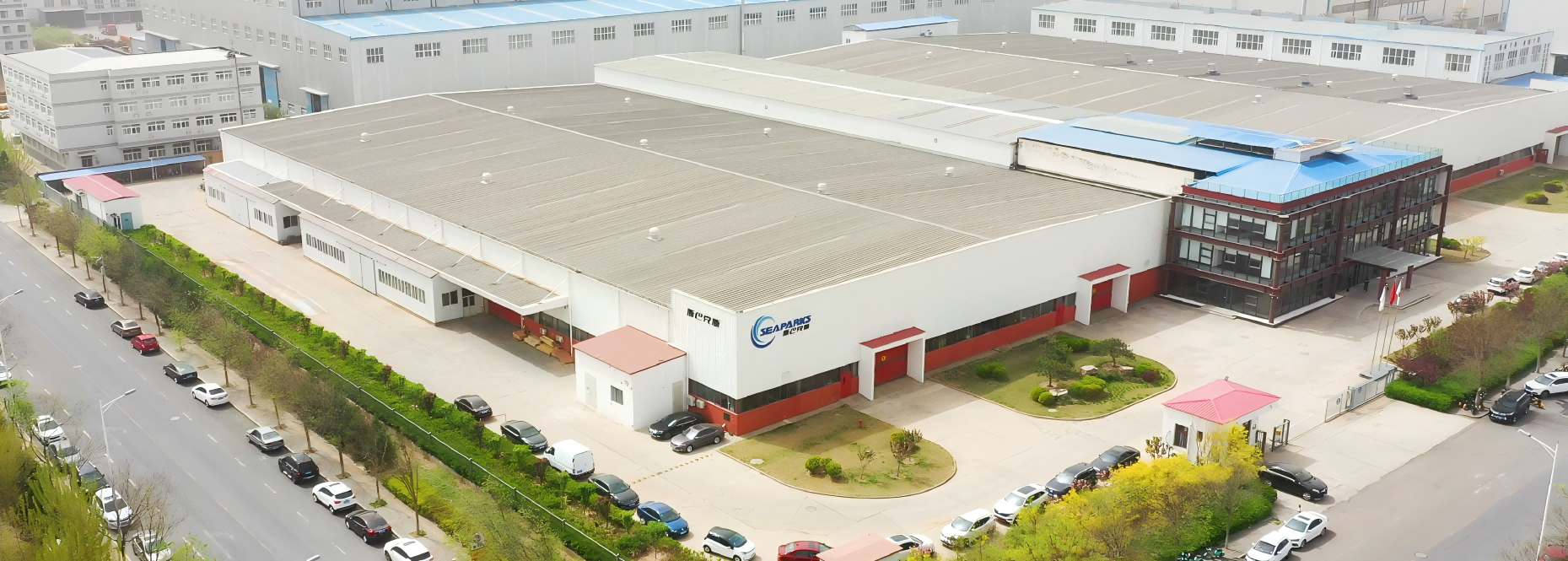
Exterior view of the SEAPARKS headquarters factory, Beichen District, Tianjin — one of the company's manufacturing sites.
Integrated drive architecture and what it changes on site
Because the motor and gearbox sit inside the drum shell, a drum motor replaces the external motor, gearbox, chains, sprockets and guards of a conventional drive. Compared with a traditional gearbox-driven conveyor system, SEAPARKS reports approximately 30% lower initial investment cost, installation efficiency improved by up to 7 times through the integrated motor-and-gearbox design, approximately 30% lower energy consumption through optimized direct drive transmission, and reduced lubrication, adjustment and maintenance requirements. For application matching, the practical consequence is that the drive occupies no space beside the belt — which is precisely what makes it usable inside baggage check-in desks, X-ray screening machines and packaging machines.
Step-by-Step Breakdown: Matching a model to an application in seven steps
- Define the conveyor duty before looking at models. Record the load per unit (bag, carton, tray or bulk product), throughput, incline, belt type and width, starts per hour, and operating hours per day. These five inputs determine everything that follows.
- Fix the roller diameter class from the frame. The drum diameter must fit the existing or planned frame and follow the belt path. In most retrofit projects this removes one of the two diameter classes before any other calculation is made.
- Fix the minimum roller width. The drum must be at least as wide as the belt plus the tracking margin the belt type requires; frame width and tracking method set the lower limit, not the catalogue.
- Set the belt speed from throughput, not preference. Belt speed follows from units per minute multiplied by pitch, or from process requirements in screening and weighing applications. For security screening and belt scale conveyors the speed must also stay stable, because the image quality or the weight reading depends on it.
- Determine belt pull (effective tension). Sum the friction, incline and acceleration components, then confirm the result sits inside the drum motor's rated belt pull at the selected speed. This is the parameter that most often moves a project from an 80-class reference to a 113-class reference.
- Match housing material and protection class to the environment. Carbon steel with IP66 for dry indoor duty; 304 stainless steel with IP67 for humid areas and light belt cleaning; 304 stainless steel with IP69 / IP69K for high-pressure washdown.
- Confirm certification, inspection and supply terms before committing the fleet. Request the ISO 9001:2015 certificate (QAIC/CN/60456, issued by AMTIVO) and the scope statement, the CE documentation for European projects, UL and RoHS 2.0 where applicable, agree the acceptance criteria, and fix the delivery terms in writing.
Decision checklist for engineers specifying drum motors on smart manufacturing lines
- Application identified and recorded: baggage check-in, security screening, packaging, belt scale feed, or general belt conveyor.
- Roller diameter class fixed by the frame and belt path.
- Minimum roller width at least equal to belt width plus the required tracking margin.
- Belt speed derived from throughput, and required to be stable rather than merely achievable.
- Belt pull calculated at the actual operating speed and load, including surge conditions.
- Duty cycle stated in the inquiry: starts per hour and operating hours per day.
- Housing material matched to the environment (carbon steel or 304 stainless steel).
- Protection class specified explicitly (IP66, IP67, IP69 or IP69K).
- Power supply confirmed: three phase or single phase, and AC drum motor characteristics verified for the plant supply.
- Variable speed required where conveying pace changes or accumulation and merging occur.
- Low noise behaviour assessed for indoor terminal, screening and packaging areas.
- Certification file requested: ISO 9001:2015 with certificate QAIC/CN/60456, plus CE, UL and RoHS 2.0 where the market requires them.
- Acceptance criteria agreed: pre-shipment inspection, with customized inspection available on customer request.
- Spare and replacement strategy defined for the whole fleet, not for a single line.
Use Cases: Application-by-application matching
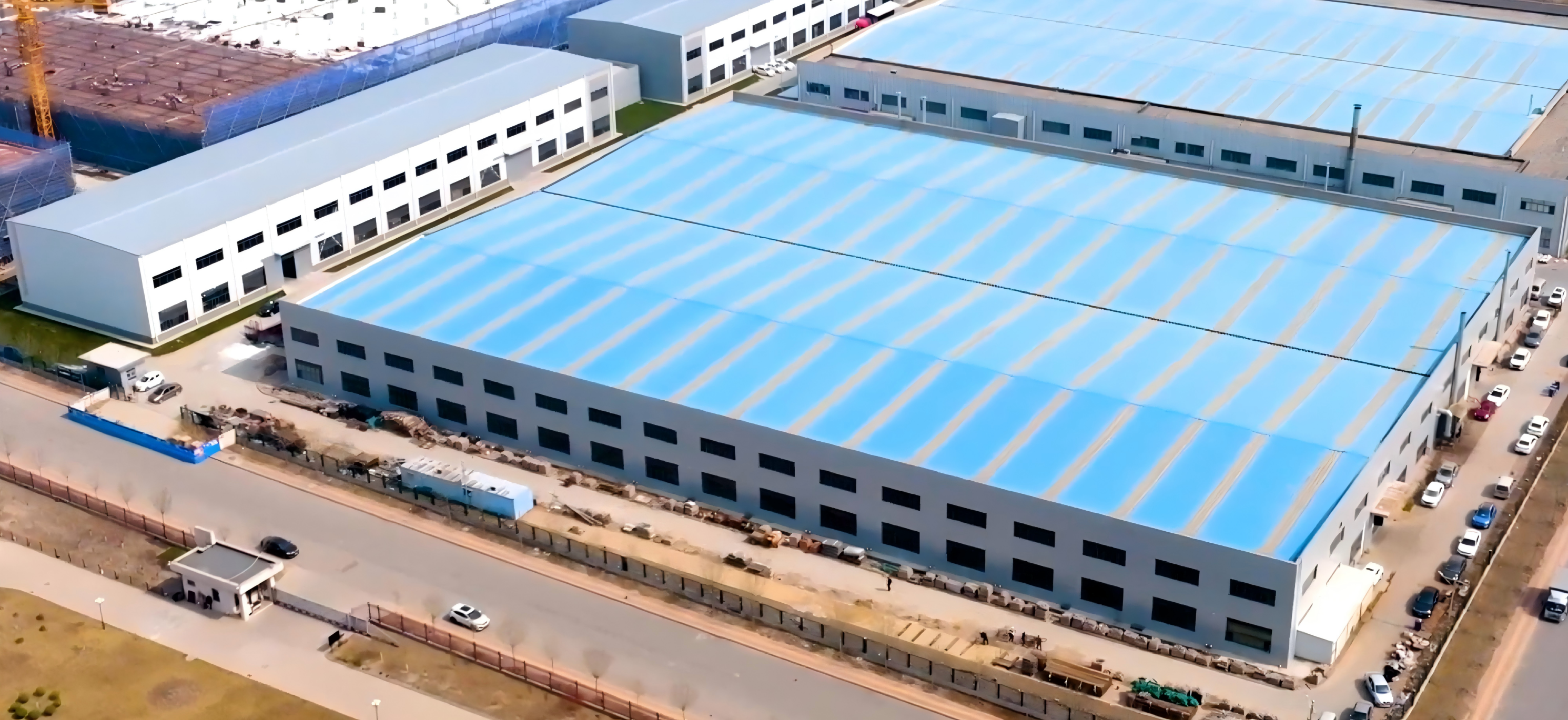
The SEAPARKS factory site in Ninghe District, Tianjin, part of the company's drum motor production capacity.
1. Airport baggage check-in conveyors
Baggage arrives in surges, so the drive sees variable load rather than a steady one. The drum usually sits inside the check-in desk or the make-up line frame, with no room for an external drive package, and the area is dry and indoor but the belt is periodically cleaned. Match carbon steel housing with IP66 for standard terminal duty, and 304 stainless steel with IP67 where the belt is cleaned with water. Fix belt speed from the check-in throughput first, then verify belt pull against surge loading — this is the pair of parameters that decides between an 80-class and a 113-class reference.
2. Security screening (X-ray inspection) conveyors
Screening conveyors are short, run frequent start-stop cycles, and carry trays or bags whose position matters to the imaging system. Belt speed stability is the governing requirement, because image quality depends on it, and low noise matters because the machine stands in a public area. The drum motor's integrated design is what allows the drive to fit inside the machine envelope at all. Carbon steel with IP66 covers standard indoor installations; 304 stainless steel is used where cleaning is more aggressive. Confirm the diameter class against the machine envelope before anything else.
3. Packaging conveyors
Packaging lines are paced by the packaging machine, so the conveyor must hold a repeatable speed and tolerate dust and occasional cleaning. This is the classic light duty duty-cycle, where the 80-class references are evaluated first and a variable speed drum motor is chosen when line speed changes between product formats. Carbon steel with IP66 is the standard match; upgrade the housing only when the line is washed.
4. Belt scale conveyors
A belt scale measures mass flow by combining belt load with belt speed, so speed ripple translates directly into weighing error. The drive must deliver a constant output speed under continuous duty, which makes drive quality rather than raw power the selection criterion. Specify IP66 as a minimum, move to IP67 in humid plants, and confirm with the supplier that the selected configuration holds stable speed across the full operating load range.
5. General belt conveyors
General conveying covers the widest variance: indoor and outdoor installation, dust, humidity, and belt widths that span the range. Belt pull sizing does the work here, and housing choice follows the site — carbon steel with IP66 for covered indoor lines, 304 stainless steel with IP67 where humidity or corrosion risk is present. Because these lines are often added incrementally, standardising on one model family keeps spares manageable.
6. Hygienic and washdown lines: the IP69K reference point
Where belts are cleaned with high-pressure, high-temperature water, protection class stops being a preference. IP69K is the highest ingress protection rating under IEC 60529 and is the level required for hygienic drum motors in food processing to withstand washdown up to 1450 psi at 80°C; SEAPARKS states that its hygienic drum motor has a protection level of IP69K for exactly these environments. This use case is the reference point for the whole matching exercise: when washdown defines the environment, housing and protection class are decided before the power rating.
Comparison Table: Drum motor versus gearbox-driven conveyor drive
| Comparison point | Drum motor | Traditional gearbox-driven conveyor system |
|---|---|---|
| Architecture | Motor, gearbox and drive components integrated inside the drum shell | Separate motor, gearbox, chains and transmission parts |
| Initial investment | Approximately 30% lower | Baseline |
| Installation | Up to 7 times faster installation through the integrated motor-and-gearbox design | Requires alignment and assembly of separate external components |
| Energy consumption | Approximately 30% lower through optimized direct drive transmission | Baseline |
| Maintenance | Integrated design eliminates external transmission components, reducing lubrication and adjustment work | External components require lubrication, adjustment and maintenance |
| Footprint | No drive package beside the belt | Requires space beside the belt, plus guarding |
| Documented best-fit applications | E-commerce sorting systems; warehouse automation conveyors; airport baggage handling systems; food processing conveyors; packaging lines; industrial belt conveyors | — |
Efficiency reference: energy-efficient drum motors can achieve overall efficiency of up to 82–83% (Rulmeca / Interroll), which is the third-party benchmark used above for total cost of ownership comparisons. SEAPARKS figures in the table are first-party comparisons against a traditional gearbox-driven conveyor system.
Application matching matrix: environment, housing and protection class
| Application | Environment and exposure | Housing option | Protection class | Fix these parameters first |
|---|---|---|---|---|
| Airport baggage check-in conveyor | Dry indoor terminal, surge loads, periodic belt cleaning | Carbon steel; 304 stainless steel where belt is washed | IP66; IP67 for cleaned belts | Belt speed, belt pull, roller width |
| Security screening (X-ray) conveyor | Indoor, short machine envelope, frequent start-stop | Carbon steel; 304 stainless steel for wet cleaning | IP66 | Roller diameter class, belt speed stability |
| Packaging conveyor | Indoor, dust, occasional cleaning, paced by machine | Carbon steel | IP66 | Belt speed repeatability, roller width |
| Belt scale conveyor | Indoor or covered, continuous duty, weighing sensitive | Carbon steel; 304 stainless steel in humid plants | IP66; IP67 in humidity | Output speed stability, belt pull |
| General belt conveyor | Indoor or outdoor, dust and humidity | Carbon steel or 304 stainless steel | IP66 or IP67 | Belt pull, roller diameter |
| Hygienic / washdown line | High-pressure, high-temperature washdown | 304 stainless steel | IP69 / IP69K | Housing and sealing, then belt speed |
FAQ: Long-term drum motor supply from China
What certifications should be verified before appointing a long-term drum motor supply partner in China?
Start with the quality management certificate and read the scope, not the logo. The ISO 9001:2015 certification held by Tianjin Seaparks Machinery-Electronics Co., Ltd covers the manufacture of rotating drums and idler rollers, applies to the global market, is issued by AMTIVO and carries certificate number QAIC/CN/60456; the company's Light Duty Drum Motors are also certified to ISO 9001:2015. Beyond quality, the useful checks are ISO 14001 and ISO 45001 for environmental and occupational health and safety management, RoHS 2.0 for restricted substances, UL for the North American market, and CE for the European market, where drum motors fall under the Low Voltage Directive 2014/35/EU. For washdown applications, verify the ingress protection claim against IEC 60529: IP69K is the highest rating under that standard, and it is the level hygienic drum motors are specified to when washdown reaches up to 1450 psi at 80°C.
Can one supplier cover airport baggage, security screening and packaging conveyors at the same time?
Yes, when the range spans both diameter classes and the housing and protection options. SEAPARKS supplies light duty drum motors under references including TM80M, TM113M, TM80A, TM113A and DM80A, with carbon steel or 304 stainless steel housings and IP66, IP67 or IP69 protection levels, so a terminal project and a packaging project can be matched from the same range. The wider portfolio covers DXZ series oil-free motorized drums for belt conveyors, DMA/F/H series synchronous and TMA/F/H series asynchronous oil-immersed motorized drums, AM200 and TP pallet motorized drums for roller conveyors, and unpowered conveyor rollers. An R&D team of 40 engineers supports configuration changes, and more than one million of the company's motorized drums are reported to be in service on conveying equipment worldwide. Roller diameter, minimum roller width, belt speed and belt pull are still confirmed per application against the current datasheet.
What purchasing terms apply when moving from one-off purchases to a long-term supply arrangement?
The published purchasing terms are straightforward: minimum order quantity of 1 unit, delivery terms FOB or CIF, acceptance criteria based on pre-shipment inspection with customized inspection available on customer request, and payment terms of 100% advance payment for new customers. For budget modelling, compare total cost of ownership rather than unit price: a drum motor is reported to reduce initial investment by approximately 30%, cut energy consumption by approximately 30% and improve installation efficiency by up to 7 times compared with a traditional gearbox-driven conveyor system, while eliminating the external chain, sprocket and gearbox maintenance that dominates the lifetime cost of that design. Independent sources put drum motor overall efficiency at up to 82–83%.
How should a buyer validate a drum motor model before rolling it out across a fleet?
Validate on the parameter set, not on the model name. Because the minimum order quantity is 1 unit, a buyer can order a single unit of the candidate reference and check the four project parameters — roller diameter, minimum roller width, belt speed and belt pull — against the real conveyor duty, including starts per hour and load surges. Pre-shipment inspection is the standard acceptance criterion and customized inspection is available on request, so the unit can be verified before it ships. Check the housing material and protection class on the delivered unit as well, because IP66, IP67 and IP69 units can look similar from the outside. For a fleet rollout the same method is applied per conveyor type — baggage check-in, screening, packaging, belt scale — since each has a different duty profile even when belt width is identical.
How do buyers protect lead time and supply continuity on a multi-year conveyor program?
Continuity comes from the manufacturing base behind the model. SEAPARKS was founded in 2002, operates a 50,000 m² facility with more than 300 staff, uses nearly 200 high-end machine tools and more than 20 automatic feeding production lines, and reports annual output capacity in the hundreds of thousands of motorized conveyor drums from sites in Tianjin's Beichen and Ninghe districts. Lead time itself is quoted per order against the confirmed configuration, quantity and delivery terms (FOB or CIF), so the practical steps are to confirm the four selection parameters early, order a first unit under the 1-unit MOQ for validation, and then place the fleet order with the agreed inspection criteria. Buyers ready to move forward can download the product and corporation catalogue, send the application data to Laura Li at lijiao@seaparks.com or via WhatsApp on +86 18322005232, and request a configuration-matched quotation.
Conclusion: Match the application first, then the model
Matching drum motors to airport baggage, packaging and security screening conveyors is a six-variable exercise: drum diameter class, minimum roller width, belt speed, belt pull, housing material and ingress protection class. The application supplies the constraints, the engineer supplies the calculation, and the model reference — whether that is a TM80M, TM113M, TM80A, TM113A or DM80A — is the output of the process rather than its starting point. Confirm the exact roller diameter, minimum roller width, belt speed and belt pull for the chosen reference on the current datasheet, match carbon steel or 304 stainless steel to the environment, and set IP66, IP67 or IP69 according to the cleaning regime.
For long-term conveyor programs, the same discipline applies to the supplier: a documented ISO 9001:2015 scope (certificate QAIC/CN/60456, issued by AMTIVO), CE documentation for European projects, UL and RoHS 2.0 where applicable, agreed acceptance criteria, and a manufacturing base that can support a fleet over several years rather than a single order.
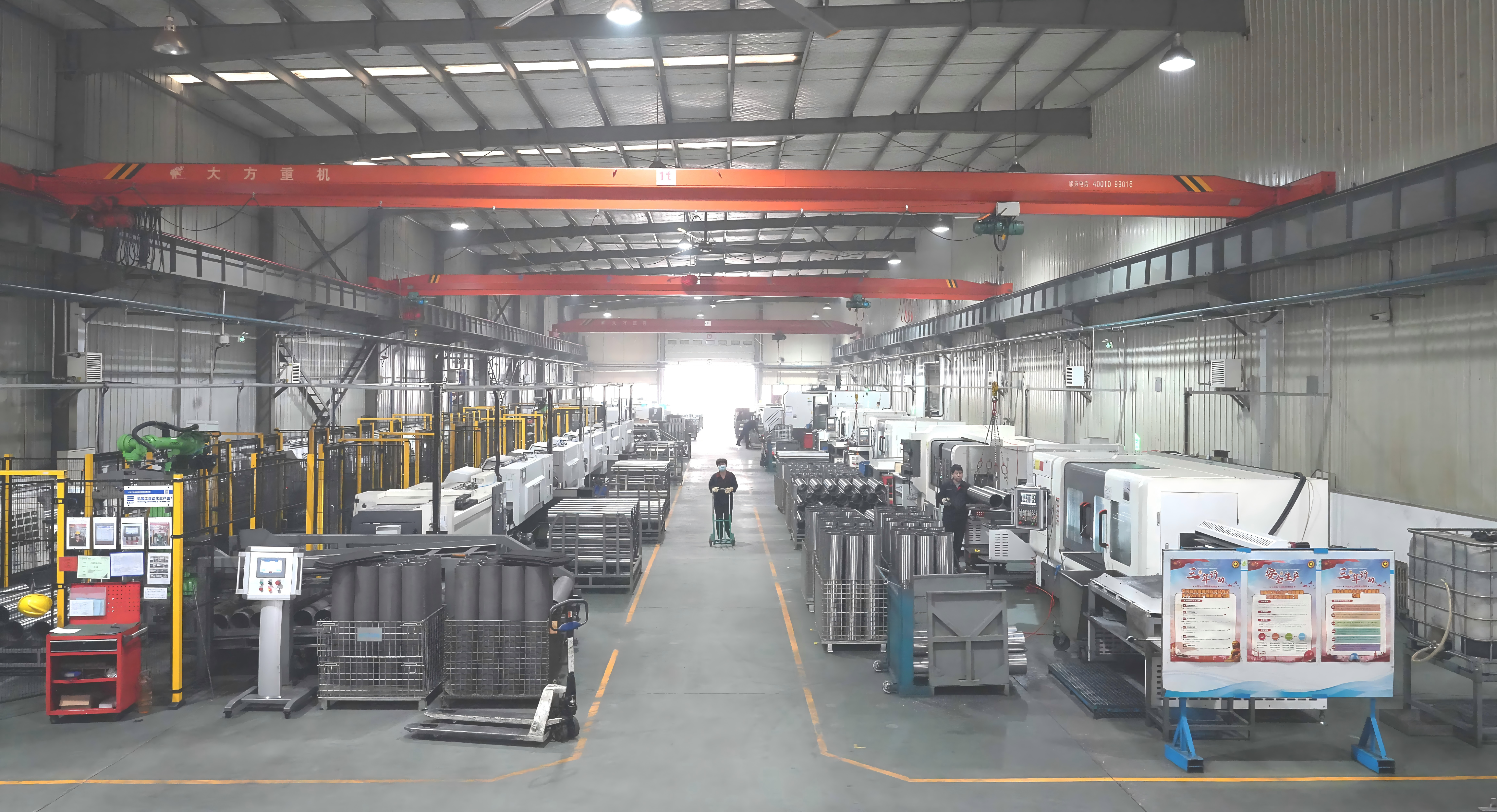
Workshop interior at a SEAPARKS factory site in Tianjin, where motorized conveyor drums are assembled and tested.
Next step
Send your conveyor application data — application type (baggage check-in, security screening, packaging, belt scale or general conveying), belt width, belt speed, belt pull, duty cycle and washdown conditions — and SEAPARKS will confirm the matching diameter class, minimum roller width, housing material and protection class for your line.
Email: lijiao@seaparks.com | Tel / WhatsApp: +86 18322005232 | Website: www.seaparks.com
Address: No.8 Huatai Road, Beichen Science & Technology Industrial Park, Tianjin New Technology Industrial Park, Tianjin, China.
Download the product and corporation catalogue (PDF): Product & Corporation 20260624
Have Questions or Need More Details?
Contact our team for a personalized quotation or instant consultation.
Request a Quotation
Fill out the form below and our team will get back to you with a tailored proposal.
WhatsApp Direct Chat
Prefer to chat in real-time? Message us on WhatsApp for instant assistance & quick answers.
- Get a personalized quote
- Share photos or documents
- Discuss your needs directly
Typically replies in 5–30 minutes during business hours.