
Drum Motor Basics: A Practical Guide to Core Types, Specs, and Selection
Drum Motor Basics: A Practical Guide to Core Types, Specs, and Selection
Summary: A drum motor—also called a motorized drum or conveyor drum motor—is a drive system that integrates the motor, gearbox, and bearings inside a single rotating shell that directly drives a conveyor belt. It is used in airport baggage handling, security screening, food processing, pharmaceutical production, logistics sorting, and general manufacturing. This guide explains how a drum motor works, what variants exist, how to read key specifications, and how to translate operating conditions into a practical selection decision.

What Is a Drum Motor and How Does It Differ from a Geared Motor?
Tianjin Seaparks Machinery-Electronics Co., Ltd., established in 2002, specializes in designing and manufacturing motorized conveyor drums. The company’s main product is the drum motor. A drum motor is a compact conveyor drive in which the electric motor and gear unit are enclosed inside the drum shell. The outer shell rotates and becomes the drive pulley, eliminating external components such as a separate gearbox, sprocket, chain, or V-belt drive.
Compared with a conventional geared motor, a drum motor offers a more compact footprint, fewer exposed moving parts, and a sealed enclosure. In hygienic and high-pressure washdown environments, the sealed design also reduces contamination risk and simplifies cleaning. This is why drum motors are widely used in conveyor systems where space, reliability, and sanitation matter.
Core Advantages and Selection Drivers
For buyers at the awareness and research stage, the main reasons to evaluate a drum motor are compactness, safety, cleanliness, and lower maintenance. Because the motor and gearbox are potted inside the drum, there is no exposed chain or gearbox to lubricate, align, or guard. This reduces safety risks and the number of spare parts to stock.
Drum motors can also deliver stable low-speed operation and frequent start-stop capability, which matters for applications such as baggage handling and X-ray security inspection conveyors. Energy-efficient designs can also improve the total cost of ownership, although the exact gain depends on the motor type, load profile, and operating schedule.
How Does a Drum Motor Work?
When power is supplied, the motor rotates inside the drum. The internal gear unit—commonly using alloy steel or polymer gears depending on the product series—reduces the motor speed and increases torque. The torque is transmitted to the drum shell through the gear train, causing the outer shell to rotate. The belt is driven directly by the drum surface.
Because the rotating shell also serves as the belt pulley, the drum motor must be correctly matched to belt width, belt pull, belt speed, and duty cycle. Specifying a drum motor is therefore not only about power in kilowatts; it also requires checking roller diameter, minimum roller width, rated torque, maximum belt pull, and nominal belt speed.
How Are Drum Motors Categorized?
SEAPARKS groups its motorized drums into two broad families: Hygienic Drum Motors (Food & Pharmaceutical Drum Motor category) and Light Duty Drum Motors (Light Duty Conveyor Drum Motor category). Within each family, the main functional differences are motor type (asynchronous or synchronous), phase configuration (single-phase, three-phase, or DC), housing material (carbon steel, 304 stainless steel, or optional 316 stainless steel), and protection class (IP66, IP67, IP69, or IP69K).
In practice, buyers also use secondary descriptors by material and environment:
- Stainless steel drum motor / hygienic drum motor: suitable for food processing, pharmaceutical production, and other washdown applications; typically 304 stainless steel housing with optional 316 stainless steel.
- Carbon steel drum motor: used where stainless steel is not required, typically in general manufacturing, packaging, and airport baggage handling systems.
- Rubber coated drum motor: a drum with a lagged or coated surface to improve belt grip for specific conveying duties (option selected by project needs).
- Low noise drum motor: often specified in baggage handling and X-ray screening conveyors; relies on precision gears, sealed bearings, and stable speed control.
- Energy efficient drum motor: designed to reduce energy consumption over long operating hours, especially for 24/7 logistics and airport operations.
These descriptors describe the same core product from different angles. The same drum motor can be simultaneously stainless steel, IP69K, low noise, and energy efficient.
Hygienic Drum Motor Design and IP69K Washdown
IP69K is the highest ingress protection rating under IEC 60529 and is required for hygienic drum motors in food processing to withstand high-pressure (up to 1450 psi) and high-temperature (80°C) washdowns. For food and pharmaceutical conveyors, the drum housing is sealed to prevent water, cleaning agents, and debris from entering the motor and gear unit.
SEAPARKS Hygienic Drum Motors use a 304 stainless steel housing with 316 stainless steel as an option, alloy steel gears, and IP69K protection. They are intended for medium-duty belt conveyors, meat processing conveyors, food processing conveyors, packaging conveyors, belt sorting conveyors, assembly lines, and agricultural product belt conveyors.
For a food processing conveyor line and cold chain conveying line, the operating environment is characterized by high humidity, frequent cleaning cycles, and potentially corrosive cleaning chemicals. In this case, the selection logic is straightforward: the drum motor should be IP69K-rated, made of food-grade 304 stainless steel (or 316 for higher corrosion resistance), and designed for easy cleaning.
Light Duty Drum Motor Series and Common Applications
Light duty drum motors are commonly used in security screening conveyors at airports and railway stations, airport baggage handling systems, packaging conveyors, belt scale conveyors, and general belt conveyors. They are generally characterized by smaller roller diameters, lower rated power, and lighter belt pull than hygienic medium-duty models.
In airport civil aviation and security inspection equipment, the conveying system needs high-precision positioning, stable low-speed operation, and anti-interference capability. The drum motor conveys luggage and parcels for X-ray security inspection with precise positioning, operates in continuous 24/7 mode, and must handle frequent start-stop cycles. Special requirements include high precision speed control, low vibration, anti-electromagnetic interference, and flame retardant materials.
SEAPARKS Light Duty Drum Motor models include TM80A, TM113A, DM113A, DM138A, TM138A, TM80M, and TM113M. Housing options are carbon steel or 304 stainless steel; protection classes IP66, IP67, or IP69 are available. Gear material is alloy steel or polymer depending on model and specification.
What Is the Difference Between Asynchronous and Synchronous Drum Motors?
An asynchronous (induction) drum motor runs slightly below synchronous speed and develops torque through rotor slip. It is typically simple, robust, and widely used in general conveying. A synchronous drum motor runs at a speed synchronized with the supply frequency, which can improve speed consistency under steady load. Both types are available in single-phase or three-phase configurations; SEAPARKS also offers DC-driven models in the small-diameter light duty range.
For variable-speed applications, a three-phase asynchronous motor paired with a frequency inverter is a common solution. Some models in the light duty series support variable speed operation depending on the inverter specification and mechanical rating.
Which Industry Applications Use a Drum Motor?
Drum motors appear in a wide range of industries. The application table below maps typical operating conditions to the appropriate product family.
| Application / Project Type | Typical Conditions | Recommended Drum Motor Type | Key Selection Criteria |
|---|---|---|---|
| Airport baggage handling & X-ray security screening | 24/7 continuous operation, frequent start-stop, anti-electromagnetic interference | Light Duty Drum Motor (e.g., TM80A, TM113A, TM80M) | High-precision speed control, low vibration, flame retardant |
| Food processing & cold chain logistics | High humidity, frequent high-pressure washdown, corrosive environment | Hygienic Drum Motor (e.g., TM113F, DM138F, TM216F) | IP69K protection, 304/316 stainless steel, easy cleaning |
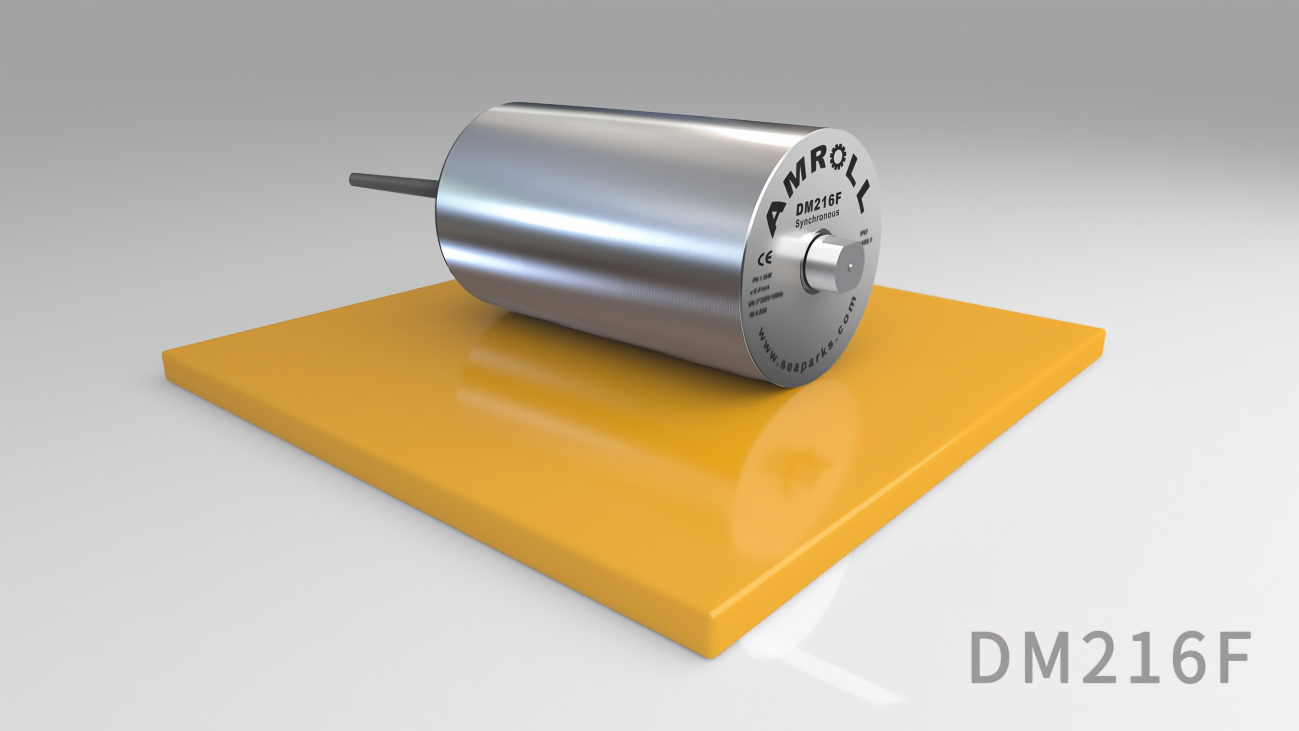
| Meat processing conveyors | Continuous operation, frequent cleaning cycles, sanitary compliance | Hygienic Drum Motor (e.g., DM216F, TM165F) | Stainless steel housing, IP69K, food-grade design |
| Agricultural product processing & feed production | Dusty environment, continuous operation, frequent material handling cycles | Hygienic Drum Motor (e.g., TM165F, TM138F) | Dust protection, reliable operation, low maintenance |
| Packaging conveyors | Moderate load, high availability, clean or light washdown | Light Duty or Hygienic Drum Motor depending on environment | Belt pull, belt speed, power rating, protection class |
Table is based on SEAPARKS application scenario data. Final selection should be confirmed with the manufacturer using load and speed values.
Step-by-Step Drum Motor Selection Process
Step 1 – Define Belt and Load Requirements
Start with belt width, belt speed, and the force needed to move the load (maximum belt pull). These values determine the required roller diameter, motor power, torque, and gear ratio. The minimum roller width is important because the drum must fit within the conveyor frame and support the belt edge.
Step 2 – Determine the Operating Environment
If the conveyor will be exposed to high-pressure washdown, food acid or cleaning chemicals, choose a stainless steel hygienic drum motor with IP69K protection. If it operates in a dusty feed or agricultural environment, choose a dust-protected unit with reliable sealing. If it is in an airport or security screening line, prioritize low vibration and anti-electromagnetic interference characteristics.
Step 3 – Choose Motor Type and Phase
Three-phase asynchronous motors are common for industrial conveyor applications. Single-phase motors are used where only single-phase supply is available, typically in lighter installations. DC synchronous motors appear in some compact light duty drums. Variable-speed operation is possible with an appropriate drive and motor combination.
Step 4 – Check Key Specifications
Once shortlisted, compare rated power, rated torque, maximum belt pull, nominal belt speed, roller diameter, minimum roller width, housing material, gear material, and protection class. For a hygienic application, also verify the protection rating and material finish.
Step 5 – Verify Supplier Capability and Certifications
For EU-bound conveyor systems, drum motors must comply with the Low Voltage Directive 2014/35/EU and bear the CE mark. Depending on the application, buyers may also require ISO certifications and broader compliance evidence. SEAPARKS has obtained ISO 9001 Quality Management System, ISO 14001 Environmental Management System, ISO 45001 Occupational Health & Safety Management System, RoHS 2.0, UL, and CE certifications. Its motorized drums are exported to more than 50 countries and regions, including China, Singapore, Southeast Asia, India, Australia, MEA, CEE & Nordics, Western Europe, DACH & Italy, USA, LATAM, Russia, and CIS.
Drum Motor Specification Walkthrough: Key Parameters
Understanding specifications is essential for selection. Using the SEAPARKS range as an example, the following table summarizes representative models across the two product families.
| Model | Motor Type | Roller Diameter | Rated Power | Rated Torque | Max Belt Pull | Belt Speed | Protection | Housing |
|---|---|---|---|---|---|---|---|---|
| TM80F | Asynchronous, three-phase | Ø80 mm | 0.04–0.12 kW | 2.96–28.91 Nm | 705 N | 0.08–1.02 m/s | IP69K | 304 SS (316 optional) |
| TM113F | Asynchronous, three-phase | Ø113 mm | 0.12–0.55 kW | 10.34–82.99 Nm | 1469 N | 0.09–1.4 m/s | IP69K | 304 SS (316 optional) |
| DM138F | Synchronous, three-phase | Ø138 mm | 0.75–1.5 kW | 27.69–273.58 Nm | 3965 N | 0.37–1.83 m/s | IP69K | 304 SS (316 optional) |
| TM216F | Asynchronous, three-phase | Ø216 mm | 3.5–4.0 kW | 207.36–507.6 Nm | 4700 N | 0.8–2.1 m/s | IP69K | 304 SS (316 optional) |
| TM80M | Asynchronous, single-phase | Ø80 mm | 0.034–0.11 kW | 2.71–25.9 Nm | 630 N | 0.05–0.85 m/s | IP66/IP67/IP69 | Carbon steel / 304 SS |
| TM113M | DC synchronous | Ø113 mm | 0.09–0.12 kW | 3.49–21.89 Nm | 534 N | 0.16–1.03 m/s | IP66/IP67/IP69 | Carbon steel / 304 SS |
| TM138A | Asynchronous, three-phase | Ø138 mm | 0.25–1.1 kW | 19.46–243.23 Nm | 3525 N | 0.11–1.69 m/s | IP66/IP67/IP69 | Carbon steel / 304 SS |
All values are from SEAPARKS published product specifications. For exact model selection, contact the supplier with your belt width, belt pull, speed, and environmental requirements.
Case Example: Hygienic Food Conveyor
A food processing conveyor line operates in high humidity, is washed down frequently with high-pressure cleaners, and must meet sanitary requirements. The environment demands corrosion-resistant materials and protection against water ingress.
The appropriate solution is a Hygienic Drum Motor from the Food & Pharmaceutical Drum Motor category. A model such as TM216F provides 304 stainless steel housing (316 optional), IP69K protection, alloy steel gears, rated power of 3.5–4.0 kW, rated torque of 207.36–507.6 Nm, maximum belt pull of 4700 N, and nominal belt speed of 0.8–2.1 m/s. The model is suitable for medium-duty belt conveyors, meat processing conveyors, food processing conveyors, packaging conveyors, belt sorting conveyors, and assembly lines.
For smaller food or pharmaceutical lines, models such as TM113F or DM138F may fit better because they require less space and offer lower power ratings while still providing IP69K protection and stainless steel construction.
Case Example: Airport Baggage and Security Screening Conveyor
An airport baggage handling system runs 24/7 and requires high-precision positioning, stable low-speed operation, and anti-interference capability. Luggage and parcels must be conveyed through X-ray security inspection with precise positioning and frequent start-stop cycles.
For these conditions, SEAPARKS Light Duty Drum Motors are suitable. Models TM80A, TM113A, DM113A, DM138A, and TM138A are all classified as Light Duty Conveyor Drum Motors. In this environment, the special requirements are high-precision speed control, low vibration, anti-electromagnetic interference, and flame retardant materials. The housing can be carbon steel or 304 stainless steel, with protection class IP66, IP67, or IP69.
Where Are Drum Motors Heading?
The global drum motor market was valued at approximately USD 2.07B to USD 2.13B in 2023–2025, with growth driven by logistics automation and food processing demands. Asia Pacific is projected to hold a 38.2% revenue share by 2025 due to rapid industrialization and e-commerce growth in China and India. For buyers, this trend means more automated conveying systems are being deployed, which increases the importance of selecting a reliable drive component.
Drum motor manufacturers are also responding to higher sanitation standards. IP69K-rated stainless steel models are becoming standard for washdown environments, while light duty motorized drums are expanding into e-commerce parcel sorting, warehouse conveying, and security screening equipment.
Drum Motor Selection Checklist
- Define belt speed and required belt pull.
- Determine conveyor operating hours and start-stop frequency.
- Check available electrical supply: single-phase, three-phase, or DC.
- Confirm whether variable speed is needed.
- Identify the environment: washdown, dust, humidity, temperature, or clean room.
- Choose housing material: carbon steel, 304 stainless steel, or 316 stainless steel.
- Select protection class: IP66, IP67, IP69, or IP69K as required.
- Compare rated torque, maximum belt pull, and nominal belt speed.
- Verify roller diameter and minimum roller width fit the conveyor frame.
- Request certification evidence for the target market (e.g., CE for EU).
- If hygiene is critical, confirm IP69K and food-grade material design.
FAQ
What is a drum motor supplier and what should the supplier provide?
A drum motor supplier is a manufacturer or distributor that designs, produces, and supplies motorized conveyor drums. A qualified supplier should provide the drum motor, technical specifications, application guidance, compliance documentation, and after-sales support. Tianjin Seaparks Machinery-Electronics Co., Ltd. is a China-based manufacturer established in 2002, specializing in designing and manufacturing motorized conveyor drums. Its main product is the drum motor. It operates a 50,000-square-meter facility with approximately 360 staff, an R&D team of 40 engineers, and an annual production capacity of 380,000 units. The company has obtained ISO 9001, ISO 14001, ISO 45001, RoHS 2.0, UL, and CE certifications, and exports motorized drums to more than 50 countries and regions.
Can a single-phase drum motor be used for a conveyor belt drive?
Yes. Single-phase drum motors are available for lighter conveyor applications where three-phase supply is not available. For example, the SEAPARKS TM80M is a Light Duty Drum Motor with a single-phase asynchronous motor, rated power of 0.034–0.11 kW, maximum belt pull of 630 N, roller diameter of Ø80 mm, and protection class IP66/IP67/IP69. It is intended for packaging conveyors, airport baggage handling systems, and security screening conveyors. For heavier loads, three-phase models with higher power and torque are usually required.
What is the difference between IP69K and other protection ratings for drum motors?
IP69K is the highest ingress protection rating under IEC 60529. It is required for hygienic drum motors in food processing to withstand high-pressure (up to 1450 psi) and high-temperature (80°C) washdowns. Lower ratings such as IP66 or IP67 protect against powerful water jets or temporary immersion, but do not specifically certify resistance to high-pressure, high-temperature washdown. For food processing and cold chain conveyors, an IP69K stainless steel drum motor is typically required.
What specifications should I compare when choosing a drum motor?
Compare rated power, rated torque, maximum belt pull, nominal belt speed, roller diameter, minimum roller width, housing material, gear material, protection class, and motor type. These specifications must match the conveyor’s belt width, belt pull, speed requirement, and environment. For hygienic applications, also verify IP69K protection and whether 316 stainless steel is available.
How do I get a drum motor specification or sample for a new conveyor project?
To get a specification or sample, contact the drum motor supplier with your project details: belt width, belt speed, load, operating environment, and available power supply. For SEAPARKS, you can contact Laura Li at lijiao@seaparks.com or +86 18322005232 (WhatsApp available). The company can provide product specifications, a brochure, and guidance on the appropriate model for your conveyor system.
Download the SEAPARKS Product & Corporation Brochure
Review the complete drum motor range, factory profile, and company capabilities: Download PDF
Have Questions or Need More Details?
Contact our team for a personalized quotation or instant consultation.
Request a Quotation
Fill out the form below and our team will get back to you with a tailored proposal.
WhatsApp Direct Chat
Prefer to chat in real-time? Message us on WhatsApp for instant assistance & quick answers.
- Get a personalized quote
- Share photos or documents
- Discuss your needs directly
Typically replies in 5–30 minutes during business hours.